Interval Analysis: "Un-chunk" Music to Understand It
To understand music on an intuitive level, “un-chunk” everything down to each individual note - then connect with how it feels.
In the Emotional Listening lesson we talked about hearing the emotions in each note. This is where we start to apply it deeper.
Here’s what I mean:
When you think “that’s a C Chord” - that’s a knowledge “chunk.”
It takes a C E and G note, and turns it into one thing - a chord.
The way you think about a “chord” is different from how you’d think about each of the notes.
This makes you gloss over the impact of each note, and start creating unconsciously.
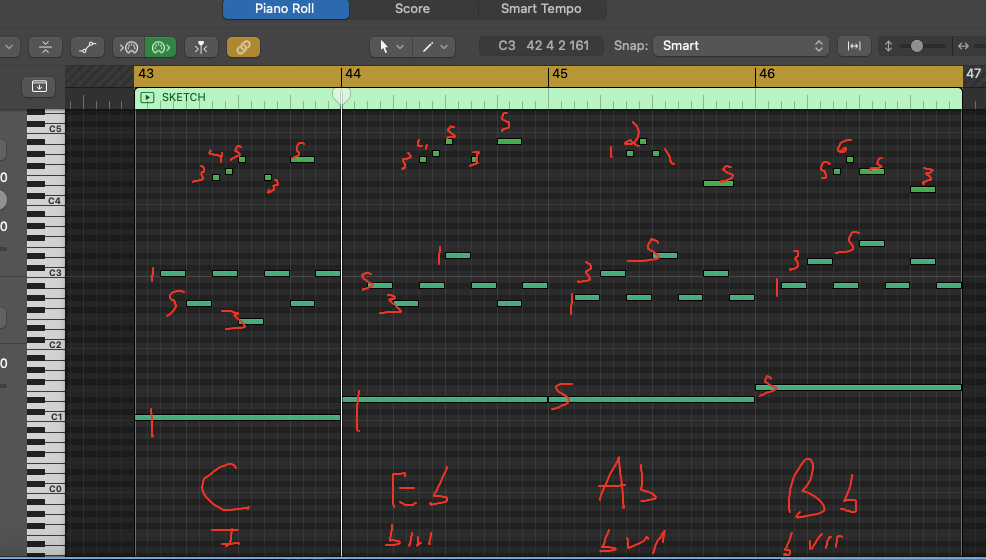
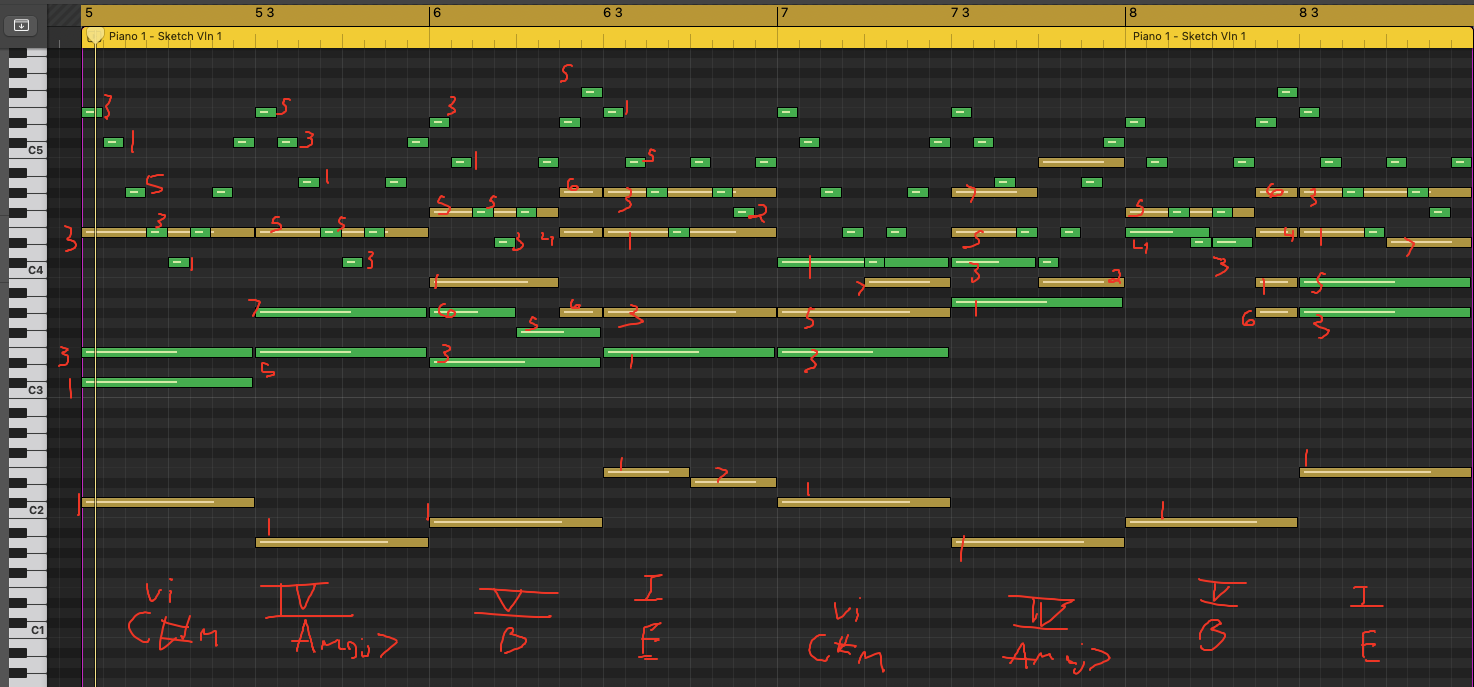
That’s why one of the first things I do in lessons is get out my big red marker and draw all over my students' sketches.
I break down every note and how it relates to the others.
Then I have them do it themselves.
Instead of thinking of a C chord, think “this moment in time will be analyzed from the perspective of C” - then notate every note from that space.
It’s hard to describe over text, but easy in person.
Here’s 2 pictures from real analysis' to show an example of what I mean.
Your Homework: Interval Analysis on Sketches
- Open the DAW and sketch 2-3 ideas in a basic sound - like a piano.
- Analyze each sketch note by note. Write the chords you used, then intervals of every single note during that “moment” in time.
- Reflect on the big picture: What did each interval feel like? It won't be exactly the same all the time - the key is that it's context dependent.
This will help you start connecting with the emotions of every note, and over time you’ll start speaking the language of music.
Because each note is a letter, and seeing how they relate to form “statements” will help you write with intention.
Avery